
5G Bandwidth Demand & Wireless Spectrum Growth
5G Spectrum Demand: Why Mobile Carriers Need More Bandwidth
📌 Table of Contents
- What Is 5G Spectrum?
- Why Mobile Carriers Need More Spectrum
- Challenges in Spectrum Allocation
- Global Comparisons: U.S. vs. Others
- How Excesslio Helps Solve the Spectrum Puzzle
- FAQs about 5G Spectrum
- Conclusion
What Is 5G Spectrum?
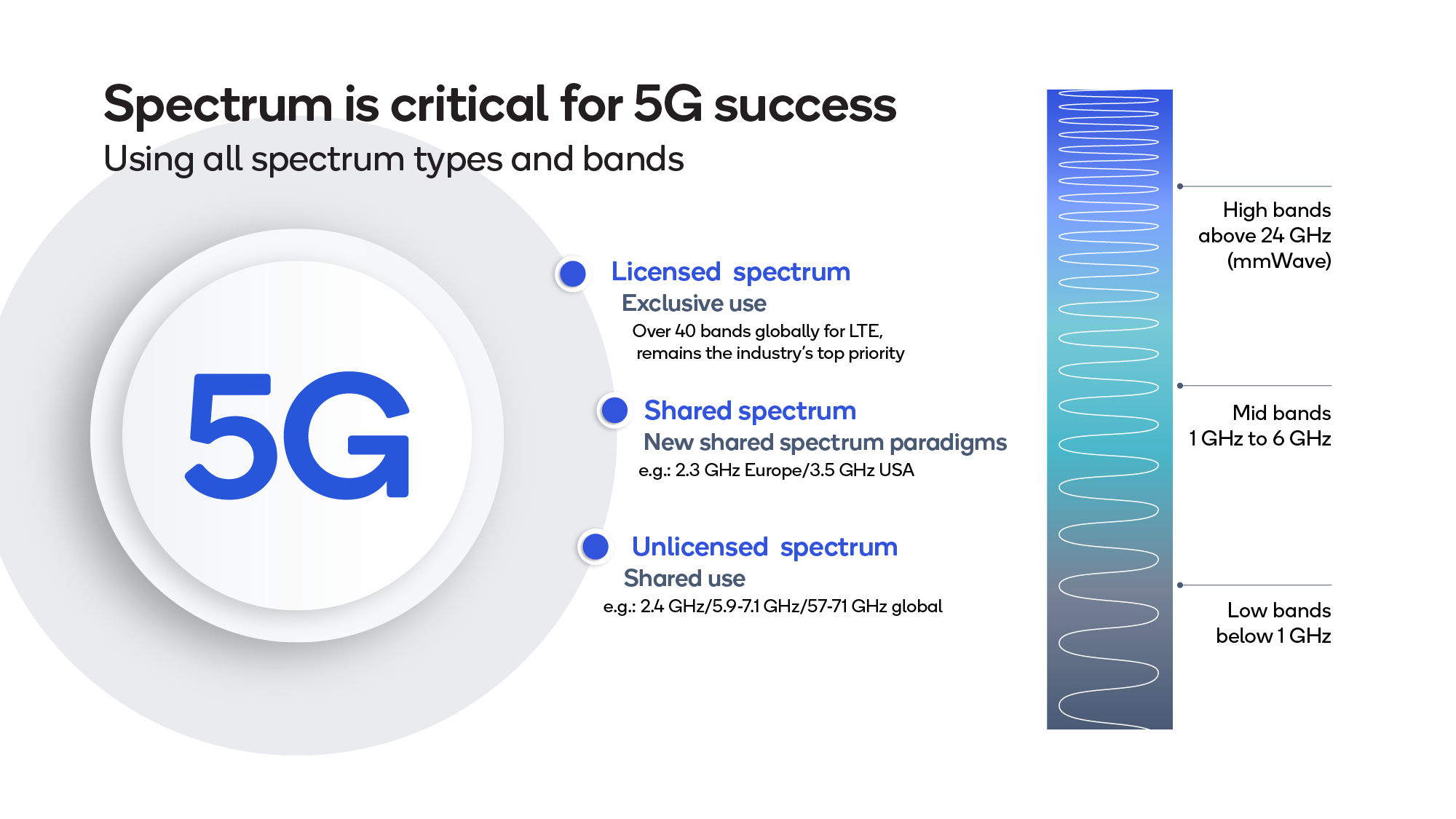
The term 5G spectrum refers to the range of electromagnetic frequencies used to transmit wireless data in fifth-generation mobile networks. These frequencies are categorized into low-band, mid-band, and high-band (millimeter wave) ranges, each offering a balance between speed and coverage. The mid-band spectrum is often considered the sweet spot for 5G due to its balance between capacity and propagation.
Why Mobile Carriers Need More Spectrum
As global data usage skyrockets—thanks to streaming, cloud gaming, remote work, and IoT—the strain on existing spectrum becomes more visible. In the U.S. alone, mobile data usage increased over 35% in 2023. Without more spectrum, 5G networks could suffer from:
- ⚠️ Slower connection speeds
- ⚠️ Increased network congestion
- ⚠️ Poor indoor coverage
- ⚠️ Limited rural access
To fully unlock 5G's potential, carriers need access to larger chunks of contiguous spectrum, especially in the mid-band range (2.5 GHz to 6 GHz).
Challenges in Spectrum Allocation
The allocation of 5G spectrum is governed by national regulatory bodies (like the FCC in the U.S.) and is often entangled with military and governmental usage. Key issues include:
- 🔒 Federal agencies occupying key mid-band frequencies
- 💸 Costly spectrum auctions driving up barriers for smaller carriers
- 🗓️ Delayed release of critical bands like the 3.45–3.55 GHz block
Without timely and fair distribution, the gap between spectrum supply and demand will widen.
Global Comparisons: U.S. vs. Others
Countries like China, South Korea, and Germany have taken a more aggressive stance on 5G spectrum. For example:
- 🇨🇳 China allocated over 500 MHz of mid-band 5G spectrum across carriers by 2022.
- 🇩🇪 Germany's auctions emphasized regional and industrial use cases.
- 🇺🇸 The U.S. lags behind, with fragmented and auction-dependent release strategies.
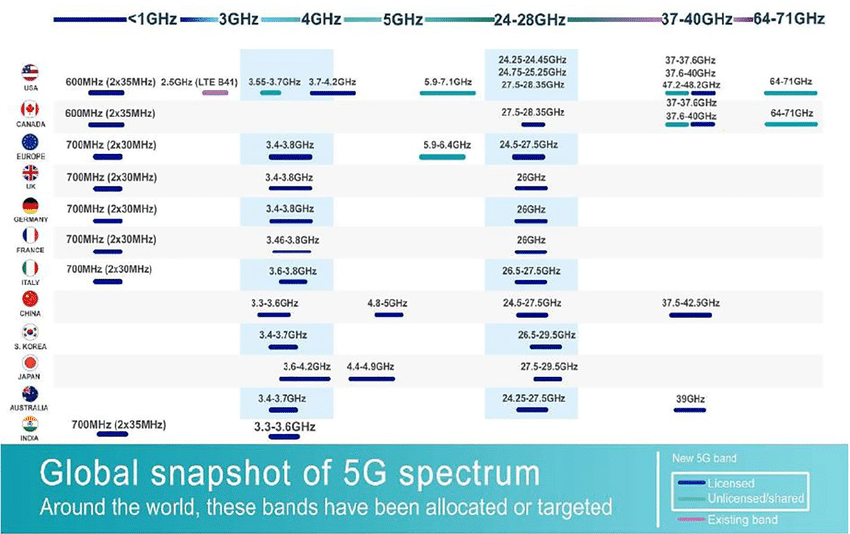
These differences could influence long-term competitiveness in areas like smart cities, autonomous vehicles, and AI-driven networks.
How Excesslio Helps Solve the Spectrum Puzzle
Excesslio is an innovative partner for mobile operators looking to adapt to modern spectrum challenges. Here's how we contribute:
- ✅ Consulting on dynamic spectrum sharing (DSS) and CBRS integration
- ✅ Network planning tools for optimizing mid- and high-band deployments
- ✅ Custom hardware and passive components for 5G densification
- ✅ Partnerships with regulators for early-access licensing
With a forward-thinking approach, Excesslio empowers carriers to stay ahead of 5G demand curves and lead in digital transformation.
FAQs about 5G Spectrum
- What are the main types of 5G spectrum?
- Low-band (under 1 GHz), mid-band (1–6 GHz), and high-band (24–100 GHz). Mid-band is best for balanced performance.
- Why is mid-band spectrum so important?
- It offers a perfect balance of coverage and speed—ideal for dense urban deployments and scalable national networks.
- How does spectrum impact 5G speed?
- More contiguous spectrum means more bandwidth, resulting in faster and more reliable data delivery.
- Is there enough 5G spectrum available globally?
- Not currently. Many countries are racing to reallocate or free up more spectrum to meet growing demand.
- How can carriers overcome spectrum shortages?
- By using strategies like network densification, spectrum sharing, CBRS bands, and working with companies like Excesslio.
Conclusion
The demand for 5G spectrum is growing faster than regulators and infrastructure can currently deliver. Without action, consumers will feel the pinch in slower speeds and coverage issues. But with the right strategy and trusted partners like Excesslio, mobile carriers can meet the challenge and unlock the full promise of 5G innovation.